My cyberdeck progress has slowed down dramatically now that I'm working on the physical build. I am new to 3D printing and CAD, but I feel like I'm learning. I'm happy enough with some of the case internals I've printed, but I still have a lot of tweaking to do.
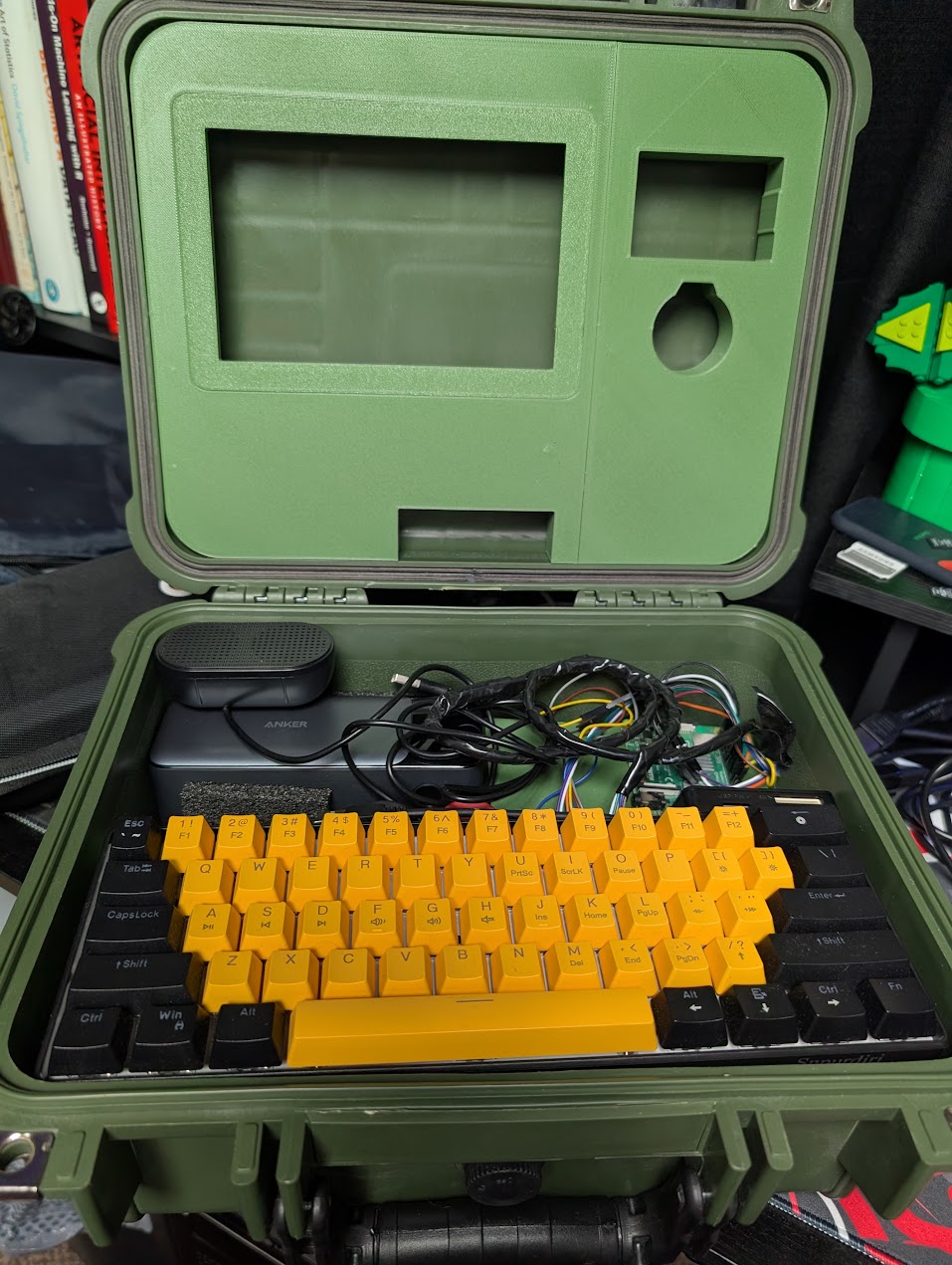
As much as I'd like to stay focused on that one project and get it finished (I feel like I'm so close!) my ADHD brain is busy thinking about a dozen other things that would be fun to work on. So I took a little detour.
The Problem
As I just mentioned, I have ADHD. I was diagnosed as an adult and have spent a lot of time since then trying to develop a toolkit to keep me organized. I've always had problems with procrastination and forgetfulness, letting a lot of important things slip through the cracks. On top of that I am highly resistant to establishing new routines. I've got stacks of notebooks, both physical and digital, that are full of random notes and to-do lists that I never reviewed. I've subscribed to several different services to help with planning and task tracking. I can generally stick with these kinds of tools for about a week before I drift back to my ad-hoc ways.
As a software engineer, I've tried to build tools to help myself out but I struggled to maintain enough interest to get those projects over the finish line. My interest level in this realm has increased recently, though, as my personal projects continue to pile up to the point that others are being impacted. I have so much work to do around the house that is way overdue, and it's an amount of work that I have difficulty finding a place for in my day. My tendency is to look at large jobs as all-or-nothing, and I'll give up on it if I hit a roadblock at any point. Thinking about the work left to do is so overwhelming that I am looking for any easy escape path. So lots of things don't get done. When I do break those large jobs into smaller, more manageable chunks I end up with another task list that finds its way into my stack of ignored task lists. That's my dysfunction loop. I've wanted to break it for decades but not enough to overcome my stubbornness.
The Idea
Enter Fable 5, Anthropic's new and most powerful model. It's no secret that I have been in absolute love with Claude Code. I've also recently been playing a lot with Claude Design. These tools together have helped get me unblocked in cases both professional and personal, and I'm always looking for opportunities to use them together to build cool things. When Fable 5 was announced, I decided to put it through its paces on a totally new project. I wanted to build something useful, so I turned my attention to the above problem: how could I use software to keep myself organized and on-task? The answer was a pretty simple one that should have occurred to me much earlier: gamification.
Why is it that I can spend countless hours grinding on sometimes mundane quests in a video game, but struggle to even think about tackling a to-do list in my real life? I don't know the answer, but I have a hypothesis. I think it's all about credit and rewards. I need some system to tell me that I did, in fact, do the thing I was supposed to do. Some kind of reward is also very motivating. It doesn't need to be something amazing, just something earned. So this was my idea. I'd build a to-do dashboard disguised as a game to trick my brain into getting things done.
This seemed like a great project to throw at Fable. I'd use Claude Code and Design in concert, both configured to use Fable, and I'd see how the development process compared to my experiences with Opus and Sonnet.
Questman
The results were amazing.
I started with a very simple set of requirements in Claude Code: - Allow creation of tasks that are either one-off or recurring - Try to be aware of how much time tasks will take - Meter out tasks day-to-day in manageable chunks - Analyze financial transaction data to look for savings opportunities (yep, that's the scope creeping before I even got started!) - Present tasks as a set of "quests" with associated rewards
It took almost no time at all for me to have a functional web app with some interesting features. I asked the agent to stick to a cyberpunk-style theme, because I'm a sucker for the aesthetic. It built out a great app with a central hub/dashboard showing what to do for the day, and several pages where users could define chores and tasks, as well as some financial analysis tools. Then I took that code repository and fed it into Claude Design along with some other vague requirements. I wanted to add workout tracking, media queueing/consumption tracking, projects, anti-goals, biometric tracking, etc. I wanted to create a one-stop-shop for managing and logging my day.
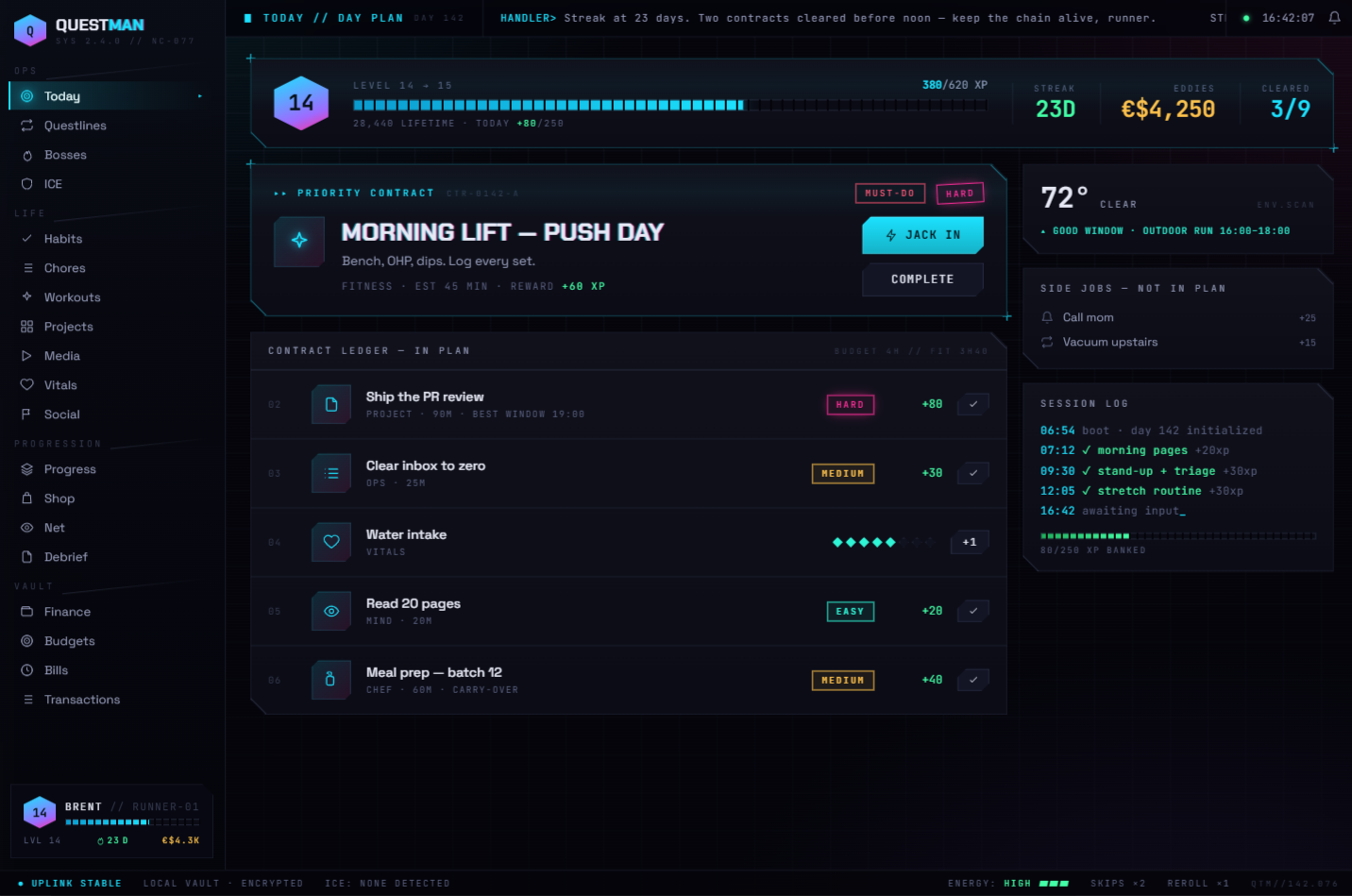
The result was Questman (a nod to the Walkman). It takes all of this data about things to get done and it turns them into daily quests. The more data you provide it, the more it's able to consider when putting together a plan for the day. If you give it health data that includes sleep tracking, it will use that to set an "energy level" for the day. If you give it your rough location, it will analyze the weather and take that into consideration when planning outdoor tasks. If you give it access to your calendar it will make sure not to overbook your time. Completing tasks offers experience points and an in-app currency that can be used to purchase visual themes and effects inside the app. It's very superficial, but it still delivers a little of that dopamine hit that I get from finishing a quest in a video game. It feels nice now, but we'll see if that still holds a month down the road.
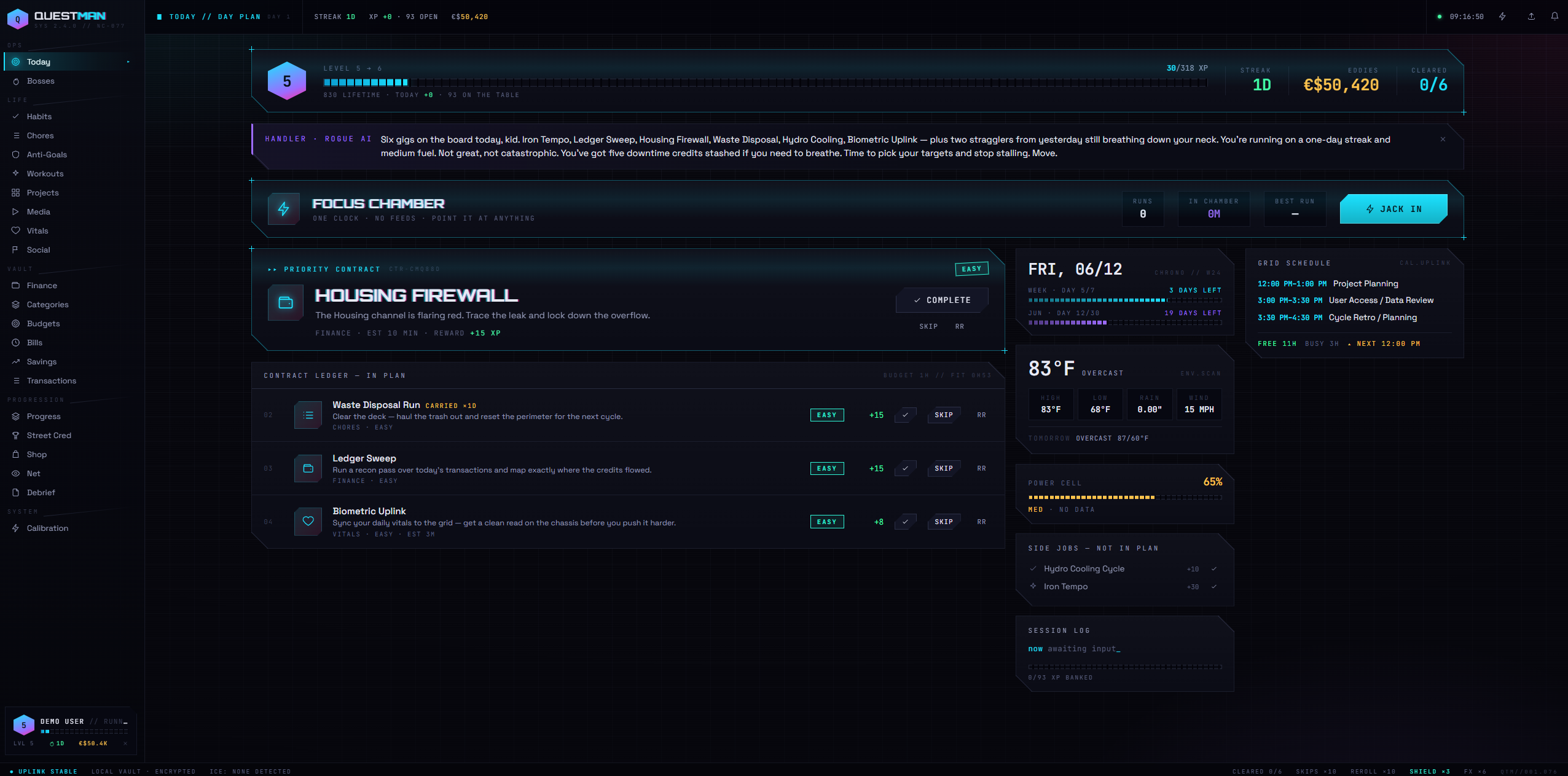
I've iterated on the project a couple times, going from Code to Design and am very happy with both the functionality and the overall appearance. It looks pretty good on large screens and on mobile browsers, and it handles everything I asked for and more. I added a focus mode with a timer, "boss fights" that track larger goals like paying off big debts, optional AI summaries of daily goals and weekly progress, and a contact list to track how often I'm reaching out to some people with whom I struggle to stay in touch. It's turning into a nice little battle station that keeps me somewhat motivated to get things done during the day.
The most exciting thing about this is that it was all built in one day. I won't talk about how many tokens it ate through (Okay, I will... It was about 7.5M and that's not taking into consideration the tokens used by the designer). The design quality that I saw with Fable 5 was noticeably better than my previous iterations with Opus 4.8. I think the quality of code output was about the same. Fable didn't seem to come up with anything that Opus wouldn't, but it certainly seemed that Fable got its work done faster. Overall I was very pleased with Fable, but not enough to adopt it fully given the looming pricing shift; Opus is good enough for me. I did struggle with usage limits at a few points due to the increased cost of running Fable coupled with the new Ultracode effort mode. This was annoying, but also a bit exciting as I hadn't yet even come close to hitting my usage limits since upgrading to a Max plan with Claude. It felt like I was really getting my $100's worth.
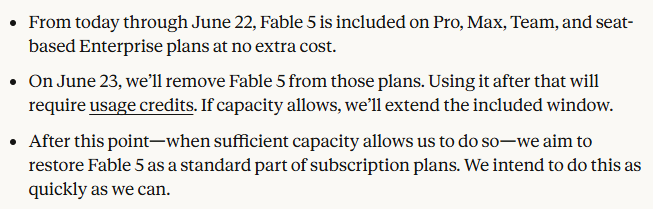
While I have access to Fable I plan to continue iterating on this project. The more I use it (which admittedly has only been a couple days) the more I want to add to it. Even though it's being built specifically to be useful for me, I figured other folks might have similar struggles and could appreciate this tool. I've posted it to a public repository so anybody can use or extend it. It currently requires a little bit of elbow grease to set up, especially for folks unfamiliar with Docker, but I plan to package it in a more accessible way soon.
As I considered packaging this project up for others, I turned my attention to configuration and privacy. I added some light AI features to help assign quests and provide some color commentary, but I realize that many people wouldn't appreciate that kind of data sharing. I made all of the AI features optional (disabled by default), added granular permissions for access to different data domains, and added support for using local LLMs via Ollama. Integrations are also all totally optional. Without any of these things configured there are still some powerful rules-based tools that build a good experience on top of your data.
So now that Questman has been added to my toolkit, I hope to break the remaining cyberdeck tasks up and continue to make progress. I am still working on a post discussing the build and hope to have it ready to share soon!